Bent Out of Shape: How Surrey's Desk Culture Is Quietly Collapsing Your Posture — and Your Confidence

There is a particular kind of fatigue that does not announce itself dramatically. It accumulates in the hours between meetings, in the slight forward lean towards a monitor, in the shoulders that creep upward and never quite return to where they belong. For Surrey's professional class — commuters, executives, entrepreneurs, and remote workers alike — this quiet physical erosion has become something of an occupational norm. The trouble is, norms have a way of becoming permanent.
Posture is rarely treated as a health priority until something gives way. A persistent ache in the upper back. A stiffness that greets you each morning. A creeping awareness that you no longer stand quite as tall as you once did. By the time these signals surface, the underlying patterns have typically been embedded for months, sometimes years.
The Anatomy of a Sedentary Working Day
The average desk-based professional in the UK now spends upwards of nine hours each day in a seated position, according to research from Public Health England. Within Surrey's commuter belt — where long working hours and demanding careers are almost cultural expectations — that figure is frequently higher still. The physical consequences of this reality are well-documented in musculoskeletal medicine, yet they remain chronically underappreciated in daily life.
When the body is held in a fixed forward position over sustained periods, the deep stabilising muscles of the core and back begin to disengage. The hip flexors shorten and tighten. The thoracic spine, which governs the mid-back, loses its natural curvature and begins to round into what clinicians refer to as kyphosis. The neck juts forward — a condition increasingly known in physiotherapy circles as "tech neck" — placing disproportionate strain on the cervical vertebrae. The shoulders, deprived of regular movement and rotation, begin to roll inward, narrowing the chest and compressing the lungs.
None of this happens overnight. It is a gradual remodelling, and that gradualism is precisely what makes it so insidious.
When Physical Alignment Meets Psychological Presence
The relationship between posture and self-perception is one that both clinical psychology and body language research have explored with increasing rigour. Studies published in journals including Health Psychology have demonstrated that slouched posture is associated not merely with physical discomfort but with measurable reductions in confidence, mood, and perceived self-efficacy. In other words, the way the body is held influences the way the mind feels — and the way others read us.
For professionals whose presence carries professional consequence — those who present to boards, lead teams, or represent their firms in client-facing contexts — this matters enormously. A rounded back, a sunken chest, and elevated shoulders communicate hesitancy, even when the individual behind them is anything but hesitant. The body, in this sense, can betray the mind.
It is a dynamic that Surrey's most ambitious professionals are increasingly attuned to. The recognition that physical carriage is not vanity but professional capital has prompted a growing number of individuals to seek targeted interventions — not merely when pain becomes unbearable, but as a form of proactive maintenance.
The Cascade Effect: What Poor Posture Triggers Beyond the Spine
Misalignment does not confine its effects to the back and shoulders. The body operates as an interconnected system, and disruption in one region reliably creates compensatory strain elsewhere. Forward head posture, for instance, increases the effective load on the cervical spine from an average of five kilograms — the approximate weight of the human head — to as much as twenty-seven kilograms at a forty-five-degree forward tilt, according to research by spinal surgeon Kenneth Hansraj. The downstream effects include tension headaches, jaw clenching, impaired breathing capacity, and disrupted sleep.
Digestive function, too, can be compromised when the abdominal cavity is chronically compressed by a collapsed torso. Circulation to the lower limbs is reduced when the pelvis is tilted anteriorly for hours at a time. Even lymphatic drainage — the body's mechanism for clearing inflammatory waste — is less efficient in a body that rarely moves through its full range of motion.
The cumulative picture is one of a body quietly working against itself, expending energy on compensation rather than restoration.
The Role of Targeted Spa Therapies in Structural Recovery
This is where professional intervention becomes not a luxury but a logical necessity. At Cornelia Spa at The Surrey, our approach to body wellness is rooted in the understanding that the body's patterns — however deeply set — are responsive to skilled, consistent therapeutic attention.
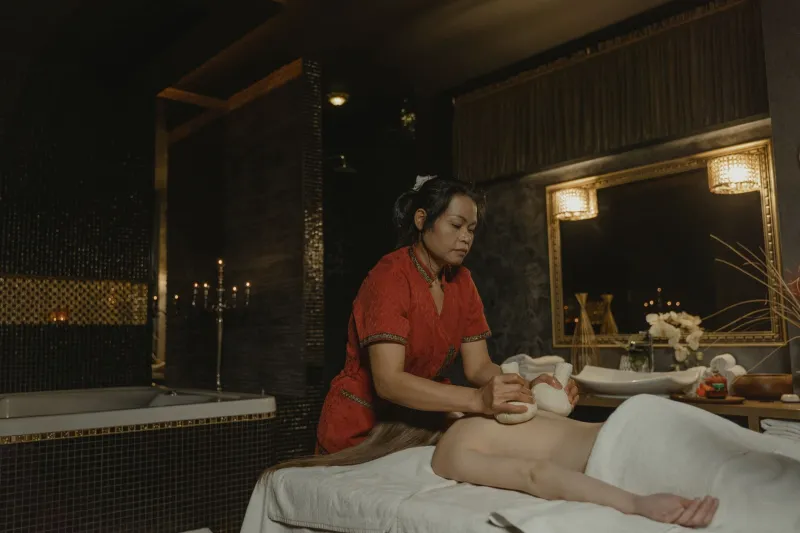
Deep tissue massage, applied by a trained therapist with knowledge of postural dysfunction, works directly upon the layers of fascia and muscle that have contracted and hardened through repetitive strain. Unlike a general relaxation massage, deep tissue work targets specific holding patterns — the chronically elevated trapezius, the rigid rhomboids, the compressed lumbar region — releasing adhesions and restoring the tissue's natural elasticity. Clients frequently report not only physical relief but a notable shift in how they carry themselves in the days that follow.
Postural alignment therapies, which may incorporate elements of myofascial release, assisted stretching, and targeted pressure work, address the structural imbalances that accumulate over years of desk-based work. These treatments do not simply address symptoms; they engage with the underlying architecture of how the body has learned to hold itself, encouraging it to relearn more efficient, upright patterns.
Body contouring and toning treatments, meanwhile, offer complementary benefits by improving circulation, reducing the fluid retention that often accompanies sedentary lifestyles, and restoring a sense of physical definition and vitality. Where poor posture has diminished not only alignment but physical confidence, these treatments contribute to a renewed awareness of and engagement with the body.
Making Recovery a Consistent Practice
The most meaningful results come not from a single appointment but from a considered, recurring commitment to physical maintenance. Just as a demanding professional would not expect a single strategy session to resolve a complex business challenge, the body's postural habits require sustained attention to genuinely shift.
We would encourage Surrey's desk-bound professionals to approach spa wellness with the same strategic thinking they apply to their careers. A monthly deep tissue treatment, paired with a quarterly postural assessment and ongoing attention to ergonomic habits at the desk, creates a framework within which genuine structural change becomes achievable.
The goal is not perfection but restoration — a return to the upright, open, and confident physical presence that long hours and relentless screen time have gradually obscured.
Reclaiming What the Desk Has Taken
Posture is, at its most fundamental, an expression of how we inhabit ourselves. When it is compromised — by demands, by habit, by the simple arithmetic of too many hours in one position — something more than comfort is lost. There is a dignity in standing tall, a quiet authority that comes from a body that is aligned and at ease.
At Cornelia Spa at The Surrey, we believe that restoring that alignment is not an indulgence. It is, for the modern professional, one of the most considered investments they can make — in their health, their presence, and ultimately, in the quality of their working life and beyond.