Productive at Rest: Why Surrey's High-Achievers Must Unlearn the Guilt of Doing Nothing

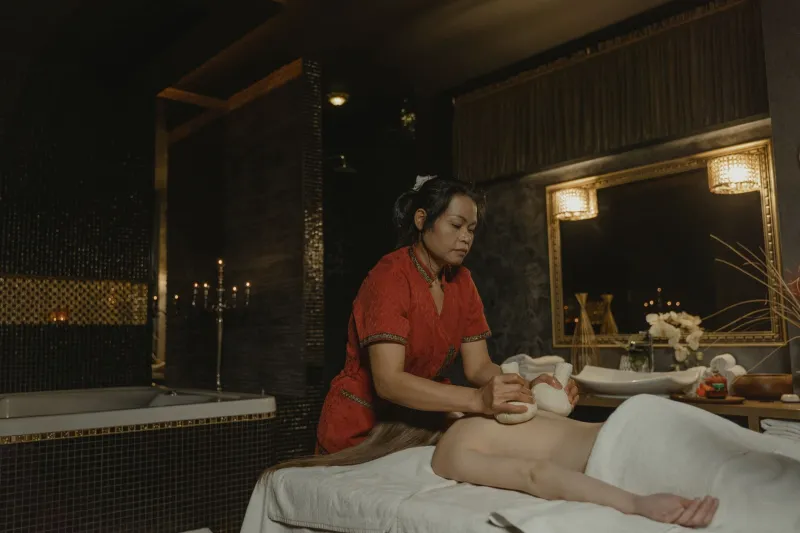
There is a particular kind of discomfort that descends upon a certain type of person the moment they lie down on a treatment table. It is not physical. The room is warm, the lighting is soft, and the therapist's hands are precisely calibrated to dissolve tension. And yet, somewhere beneath the Egyptian cotton towel, a thought surfaces with quiet persistence: I should be doing something.
This is the wellness paradox in its most intimate form. The very individuals who stand to gain the most from structured rest — Surrey's senior executives, entrepreneurs, and high-functioning professionals — are frequently the least equipped to receive it. Not because they lack the means, nor even the desire, but because decades of productivity culture have rewired their relationship with stillness itself.
The Neuroscience of Guilt at Rest
The brain does not distinguish easily between idleness and failure. For those who have spent years associating output with self-worth, the neural pathways that trigger unease during inactivity become deeply entrenched. Research in cognitive neuroscience has demonstrated that the default mode network — the region of the brain active during rest — can become dysregulated in individuals who consistently suppress it in favour of task-oriented thinking.
In plain terms: the more relentlessly one works, the less naturally the brain accepts a pause. When rest is finally enforced, the default mode network does not simply switch on and offer relief. Instead, it can generate ruminative thought — replaying unfinished tasks, rehearsing tomorrow's agenda, cataloguing everything that remains undone. The sensation of guilt during leisure is, in this sense, a neurological habit rather than a moral reality.
This is not a minor inconvenience. It represents a significant barrier to the restorative function that spa treatments are specifically designed to facilitate. A body that cannot fully surrender to parasympathetic activation — the physiological state of rest and recovery — cannot complete the neurological reset that genuine relaxation provides.
What Surrey's Therapists Observe
Those working within luxury wellness environments across the county will recognise this pattern immediately. Experienced therapists at Cornelia Spa at The Surrey frequently note that new clients, particularly those arriving from high-pressure professional backgrounds, exhibit a characteristic resistance during the opening minutes of a treatment. Shoulders remain subtly raised. Breathing stays shallow. Conversation — often about work — continues until gently discouraged.
This is not rudeness. It is a coping mechanism. For individuals whose identity has become tightly bound to their professional output, the absence of a task can feel not like relief, but like exposure. Without the structure of a meeting, a deliverable, or a decision to be made, there is a momentary loss of the self that productivity has constructed.
Seasoned therapists understand that the first layer of tension they work through is rarely muscular. It is psychological. The physical holding patterns — the locked jaw, the braced trapezius, the compressed thoracic spine — are merely the body's way of mirroring the mind's refusal to let go.
The Productivity Trap
British professional culture carries a particular reverence for busyness. To be occupied is to be valuable. To rest, by contrast, carries a faint cultural suspicion — a residual Protestant work ethic that equates stillness with sloth. In Surrey's affluent commuter belt, where many residents divide their lives between demanding London careers and the maintenance of an aspirational lifestyle, this pressure is amplified rather than diminished.
The irony is profound. The pursuit of maximum productivity, taken to its logical extreme, produces the very cognitive degradation it seeks to prevent. Sleep deprivation, chronic stress, and the suppression of recovery time do not sharpen performance — they erode it. Attention narrows. Decision-making quality declines. Creativity, which requires precisely the kind of unfocused, wandering cognition that rest enables, diminishes.
The most successful people are not those who work the most hours. They are those who have mastered the discipline of recovery.
Reframing Rest as Active Investment
The shift required is not motivational — it is conceptual. Spa wellness, approached with intention, is not the absence of productivity. It is one of its most sophisticated expressions.
Consider what a well-executed treatment actually delivers. Deep tissue massage reduces cortisol levels and increases serotonin and dopamine production, improving mood regulation and cognitive clarity. Facial treatments stimulate lymphatic drainage and cellular renewal, supporting the skin's barrier function against the environmental stressors that accompany a demanding professional life. Hydrotherapy activates the parasympathetic nervous system, lowering heart rate and blood pressure in ways that protect long-term cardiovascular health.
None of this is passive. The body is performing complex physiological work during a treatment. The mind, relieved of its executive function, is consolidating memories, processing emotional data, and restoring the attentional reserves that sustained concentration depletes. Far from being lost time, a ninety-minute treatment at a facility such as Cornelia Spa at The Surrey represents a form of biological maintenance that no amount of efficient scheduling can replicate.
Executives who would think nothing of investing in premium technology to enhance their professional output often require a reframe to justify the same investment in their own neurological infrastructure. Yet the return is arguably more reliable. A rested mind makes better decisions. A recovered body sustains higher performance for longer. The maths, as any high-achiever would appreciate, is straightforward.
Practising the Permission
The practical challenge, of course, is that insight alone does not dissolve conditioned guilt. Knowing intellectually that rest is valuable does not automatically make it feel acceptable. This is where the structure of a formal spa environment proves particularly useful.
Unlike attempting to rest at home — where the visual cues of unfinished domestic tasks, the proximity of a laptop, and the absence of external boundaries all conspire against genuine decompression — a dedicated spa space removes the environmental triggers that sustain a productive mindset. The transition is architectural as much as psychological. One enters a space designed, at every sensory level, to communicate that a different mode is now appropriate.
For those new to this experience, therapists often recommend beginning with treatments that provide a clear physical focus — a deep tissue massage, for instance, or a structured facial protocol — rather than open-ended relaxation. Having a defined process to follow, even as a recipient, can ease the transition for minds accustomed to agenda-driven environments.
Over time, with repeated exposure, the nervous system learns to associate the cues of a spa visit — the scent, the warmth, the quality of silence — with the permissibility of release. What begins as an effortful act of self-discipline gradually becomes something closer to instinct.
The Most Productive Thing You Can Do Today
Surrey's most capable professionals did not reach their positions by ignoring evidence. The evidence here is unambiguous: sustained high performance requires structured recovery, and structured recovery requires the willingness to stop.
The guilt, when it arrives on the treatment table, is not a signal that something is wrong. It is the sound of an old habit encountering a better one. The discipline, in this context, is not to work harder. It is to rest with the same intention and rigour that one brings to everything else.
At Cornelia Spa at The Surrey, we understand that for many of our guests, the most challenging appointment of the week is the one they have made with themselves. We consider it our privilege to make that appointment worth keeping.