The Silent Toll of Success: Why Surrey's High-Achievers Are Choosing Solitude as a Radical Act of Self-Care
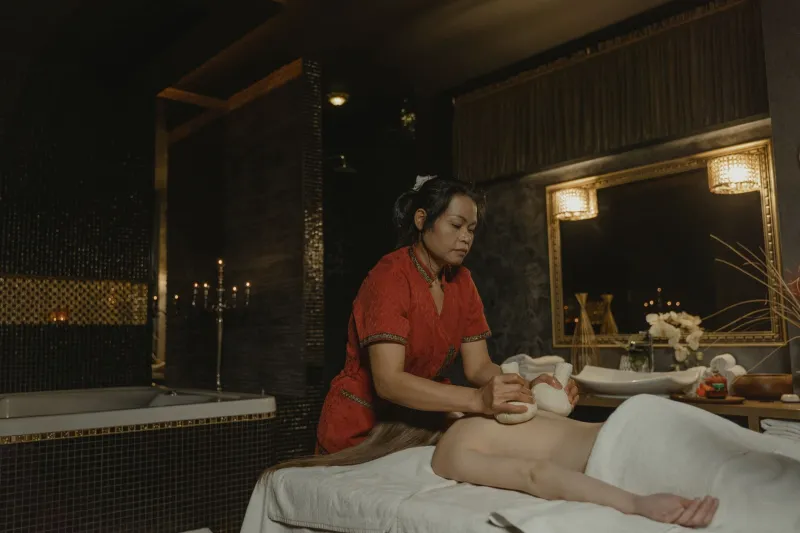
There is a particular kind of loneliness that does not announce itself. It does not arrive with tears or obvious distress. Instead, it settles quietly into the margins of a life that, from the outside, appears entirely enviable — a well-appointed home in Guildford or Weybridge, a demanding career, a social calendar that rarely permits a free Saturday. It is the loneliness of perpetual performance, of being consistently present for everyone else whilst becoming increasingly absent from oneself.
This silent epidemic is, according to a growing body of psychological research, one of the most significant — and least discussed — occupational hazards facing Surrey's professional classes. And it is prompting a quiet revolution in how some of the county's most discerning individuals are choosing to invest in their own wellbeing.
The Paradox of the Connected Life
It may seem counterintuitive that loneliness should afflict those who are, by every conventional measure, extraordinarily connected. Yet researchers at the University of California, Los Angeles, whose work on the neuroscience of loneliness has been widely cited across clinical psychology, have demonstrated that the quality of connection matters infinitely more than its quantity. One may attend three networking events in a single week, manage a team of twenty, and maintain an active presence on LinkedIn — and still experience the particular ache of feeling fundamentally unseen.
For Surrey's high-achieving professionals, the cultural pressure to project competence compounds this problem considerably. Admitting to loneliness within circles that valorise resilience and productivity is, for many, simply not an option. The result is a form of emotional suppression that accumulates over months and years, quietly depleting the very reserves that sustain both professional performance and personal wellbeing.
This is not a fringe concern. The Campaign to End Loneliness has consistently identified working-age adults — particularly those in high-pressure roles — as an underserved and underacknowledged group in the national conversation around social isolation. The affluence of Surrey's demographic does not insulate its residents from this reality; in some respects, it intensifies it.
Why Touch Matters More Than We Acknowledge
At the heart of the therapeutic case for regular spa treatment lies a physiological truth that modern life tends to overlook: human beings are, quite literally, wired for touch. The skin is the body's largest sensory organ, and its nerve endings are in constant communication with the central nervous system. When touch is absent, or when the only physical contact a person experiences is incidental — a handshake, a crowded train carriage — the body registers a form of deprivation.
Clinical research published in Psychoneuroendocrinology has demonstrated that therapeutic touch — the kind delivered through professional massage, facial treatment, and bodywork — measurably reduces circulating cortisol levels whilst stimulating the release of oxytocin, the neurochemical most closely associated with feelings of trust, safety, and belonging. In practical terms, a single professional treatment can interrupt the stress cycle in ways that a week of self-administered relaxation techniques may not achieve.
For those experiencing the particular loneliness of high performance, this is not a trivial distinction. The body does not differentiate between emotional and physical depletion; both draw from the same finite reservoir. Restoring one begins, meaningfully, to restore the other.
The Radical Ordinariness of Going Alone
There remains, within certain social circles, a residual awkwardness around the idea of attending a spa unaccompanied. Spa visits are culturally coded as social occasions — hen parties, birthday celebrations, gifts shared between friends. To arrive alone, by choice, is to quietly transgress a convention that many have never consciously examined.
And yet it is precisely this transgression that makes solitary spa rituals so potent as acts of self-advocacy.
When a person chooses to spend two hours entirely in their own company — without the obligation to entertain, to listen, to perform — they are making a deliberate statement about their own worth. They are, in the most practical sense, prioritising themselves. Not as an afterthought, not as a residual beneficiary of time left over from other commitments, but as the explicit purpose of the occasion.
This is, for many high-achievers, profoundly unfamiliar territory. The discomfort it initially provokes is itself instructive — a signal of how thoroughly the habit of self-neglect has become normalised.
Creating Sacred Space in a Fragmented Life
At Cornelia Spa at The Surrey, we observe this shift with both care and conviction. Increasingly, the clients who arrive at our doors are not seeking distraction or entertainment. They are seeking something quieter and considerably more valuable: genuine contact with themselves.
The architecture of a well-considered spa ritual — the deliberate transition from the pace of ordinary life, the unhurried attention of a skilled therapist, the carefully curated sensory environment — creates what might be described as sacred space. Not in any religious sense, but in the older and more elemental meaning of the word: space that is set apart, protected, held with intention.
Within that space, something that rarely occurs in the course of a Surrey professional's working week becomes possible. The thinking mind quietens. The body, so often treated as merely a vehicle for cognitive output, is attended to with genuine care. And the self — the actual, interior self that exists beneath the roles and responsibilities — is permitted, briefly, to surface.
This is not a luxury in any superficial sense. It is, for many, a form of psychological maintenance as essential as sleep or nutrition.
Reframing the Narrative Around Self-Investment
The cultural narrative that frames self-care as self-indulgence is, at its core, a form of collective self-deception. It serves no one well — least of all those who internalise it most thoroughly. The professional who dismisses the value of regular therapeutic treatment because they cannot justify the time is, almost invariably, the same professional who will eventually be forced to reckon with the consequences of that dismissal: chronic fatigue, emotional flatness, a creeping sense of disconnection that resists easy remedy.
Choosing, instead, to treat solitary spa rituals as a non-negotiable component of a sustainable life is not a sign of weakness or extravagance. It is an act of intelligence — and, increasingly, one that Surrey's most self-aware residents are making with quiet conviction.
The loneliness behind closed doors does not resolve itself. But it can be met, with intention and consistency, by those willing to step through a different kind of door entirely.