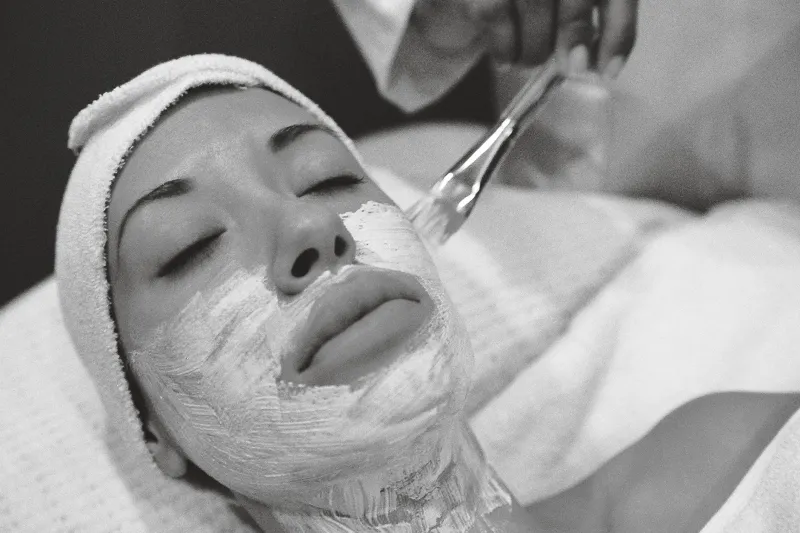
Written on the Face: Why Surrey's Decision-Makers Are Turning to Professional Facials as a Front Line Against Stress-Induced Ageing

There is a particular kind of exhaustion that no amount of sleep quite resolves. It settles into the skin — into the fine lines around the eyes, the dullness of a complexion that once had clarity, the low-grade inflammation that makes a face look perpetually strained rather than composed. For many of Surrey's senior professionals, this is not an abstract concern. It is something they see in the mirror each morning before a full diary begins.
The science behind this phenomenon is well-established, even if the conversation around it remains surprisingly hushed in professional circles. Cortisol — the body's primary stress hormone — does not merely affect mood and sleep. In sustained, elevated quantities, it actively degrades collagen, disrupts the skin's natural barrier function, and accelerates the cellular ageing process. The result is a face that begins to narrate, quite publicly, the private pressures of a high-demand life.
The Biology of Boardroom Pressure
When the body perceives stress, it responds with a cascade of hormonal activity designed, evolutionarily speaking, for short-term survival. Cortisol and adrenaline redirect blood flow, suppress immune function, and mobilise energy reserves. In acute situations, this is appropriate and effective. In the context of a modern executive's life — where the stressors are persistent, sophisticated, and rarely resolved in a single moment — the consequences are cumulative.
Elevated cortisol suppresses the production of collagen and hyaluronic acid, two of the skin's most essential structural components. Without adequate collagen, the skin loses its firmness and elasticity; without sufficient hyaluronic acid, it loses its capacity to retain moisture. The visible outcome is accelerated wrinkling, sagging, and a loss of the luminosity that signals genuine vitality. Simultaneously, chronic stress triggers inflammatory responses within the skin, manifesting as redness, uneven tone, and heightened sensitivity.
For Surrey's decision-makers — many of whom operate across demanding professional environments whilst managing the considerable pressures of affluent domestic life — these effects are not theoretical. They accumulate quietly, over months and years, until the face begins to reflect a version of oneself that feels neither accurate nor acceptable.
Composure as Currency
In professional environments where authority is communicated as much through presence as through performance, the appearance of composure carries genuine weight. This is not a superficial observation. Research in social psychology consistently demonstrates that perceived vitality and alertness influence how colleagues, clients, and counterparts respond to an individual's leadership. A face that projects fatigue or strain — however unjustly — can subtly undermine the credibility that years of experience have built.
Surrey's senior professionals are acutely aware of this dynamic. Many speak, in private, of the disconnect between how capable they feel internally and how visibly worn they appear externally. The two are not always aligned, and it is precisely this gap — between inner resource and outward expression — that professional facial treatments are uniquely positioned to address.
The psychological dimension is equally significant. There is a well-documented relationship between how individuals feel about their appearance and how confidently they inhabit their professional roles. When the face in the mirror reflects vitality rather than depletion, the effect on self-assurance is measurable. For those who must project authority consistently, this is not a trivial consideration.
Why Professional Treatments Outperform the Cabinet
The British skincare market is formidable. Premium serums, retinoids, and peptide-rich moisturisers occupy significant shelf space in the bathrooms of Surrey's most discerning households. Yet the limitations of a self-administered skincare routine — however conscientiously maintained — become apparent when the underlying causes of skin deterioration are physiological and chronic rather than merely topical.
Professional facial treatments operate at a fundamentally different level of intervention. At Cornelia Spa at The Surrey, therapists are trained to assess the skin's condition in real time, identifying patterns of inflammation, dehydration, and structural loss that a standardised routine cannot adequately address. Treatments are calibrated to the individual — their skin type, their specific stress-related concerns, their lifestyle — rather than applied generically.
Techniques such as lymphatic drainage massage, for example, directly counteract one of stress's most visible effects: fluid retention and puffiness around the eyes and jaw. Advanced exfoliation protocols remove the dull, compromised surface cells that chronic cortisol exposure accelerates, revealing the clearer, more even-toned skin beneath. Targeted infusions of active ingredients — vitamin C, niacinamide, hyaluronic acid — replenish what sustained stress progressively depletes.
Critically, the treatment environment itself plays a role that is impossible to replicate at home. The deliberate stillness of a professional spa setting interrupts the cortisol cycle in a way that a bathroom routine, conducted between commitments, cannot. Parasympathetic nervous system activation — the physiological state associated with rest and recovery — is a prerequisite for genuine skin restoration, and it is something that Cornelia Spa at The Surrey is specifically designed to facilitate.
Preventative Logic in a High-Performing Life
The shift in how Surrey's professionals are framing facial treatments is perhaps the most telling development. Increasingly, regular appointments are not pursued reactively — in response to a dramatic deterioration — but proactively, as part of a considered approach to maintaining professional form over the long term.
This mirrors a broader evolution in how the most high-functioning individuals in Surrey approach their health. Just as cardiovascular fitness is understood to be maintained through consistent effort rather than emergency intervention, skin health is beginning to be viewed through the same preventative lens. The executive who books a monthly facial is not indulging a whim; they are servicing an asset that their professional life depends upon.
The financial logic is coherent. The cost of sustained professional facial care is modest relative to the investment Surrey's leaders make in their wardrobes, their vehicles, and their properties. Yet the returns — in maintained skin integrity, in psychological composure, in the quiet authority that a rested, vital face communicates — are arguably more consequential than any of those other expenditures.
The Invisible Uniform, Reconsidered
There is an unspoken uniform in Surrey's professional landscape. It comprises the suit, the shoes, the watch — all the visible signals of competence and standing. What is less often acknowledged is that the face, too, forms part of that uniform. It is the one element that cannot be changed between meetings, cannot be upgraded seasonally, and cannot be delegated to a stylist.
For Surrey's leaders, the recognition that the face requires the same deliberate investment as any other aspect of professional presentation is, ultimately, a mark of intelligence rather than vanity. Stress will not disappear from a demanding life. But its most visible consequences need not be permanent, nor need they be left unaddressed.
At Cornelia Spa at The Surrey, that address begins with understanding — of the skin's condition, of the pressures that have shaped it, and of the treatments most precisely suited to restoring what sustained high performance inevitably takes away.